
Who actually controls your business website?
Domain registration, hosting, CMS access and backups have different owners and logins. A short access review can prevent disruption when a supplier changes.

Updates, news and developments from hosting, security and Internet infrastructure.
Domain registration, hosting, CMS access and backups have different owners and logins. A short access review can prevent disruption when a supplier changes.

A successful form submission does not prove that an email reached the inbox. Follow the message from the form to the receiving mailbox to find the missing step.
WordPress has changed how its security team prioritises vulnerability reports. Most website owners do not need to do anything immediately, but the change helps explain how security fixes reach WordPress sites.
A website can suddenly feel slower even when nobody has changed its pages, plugins or design. The reason is often something happening around the website rather than inside it.
Recovery planning becomes clearer when a business can answer two practical questions: how long can the service be unavailable, and how much recent data can it afford to lose?
WordPress 7.0.4 arrived on August 12 with a security fix affecting sites where Author-level users can upload malicious files in environments using Imagick and Ghostscript.
An R2 availability incident affecting a small set of buckets in early August is a useful reminder that cloud storage is a dependency that applications should be designed to tolerate.
When some visitors can open a site and others cannot, the problem may sit somewhere along the Internet path rather than on the website itself.
Not every failed email has the same cause. A permanent bounce, a temporary deferral and a message placed in spam describe very different delivery outcomes.
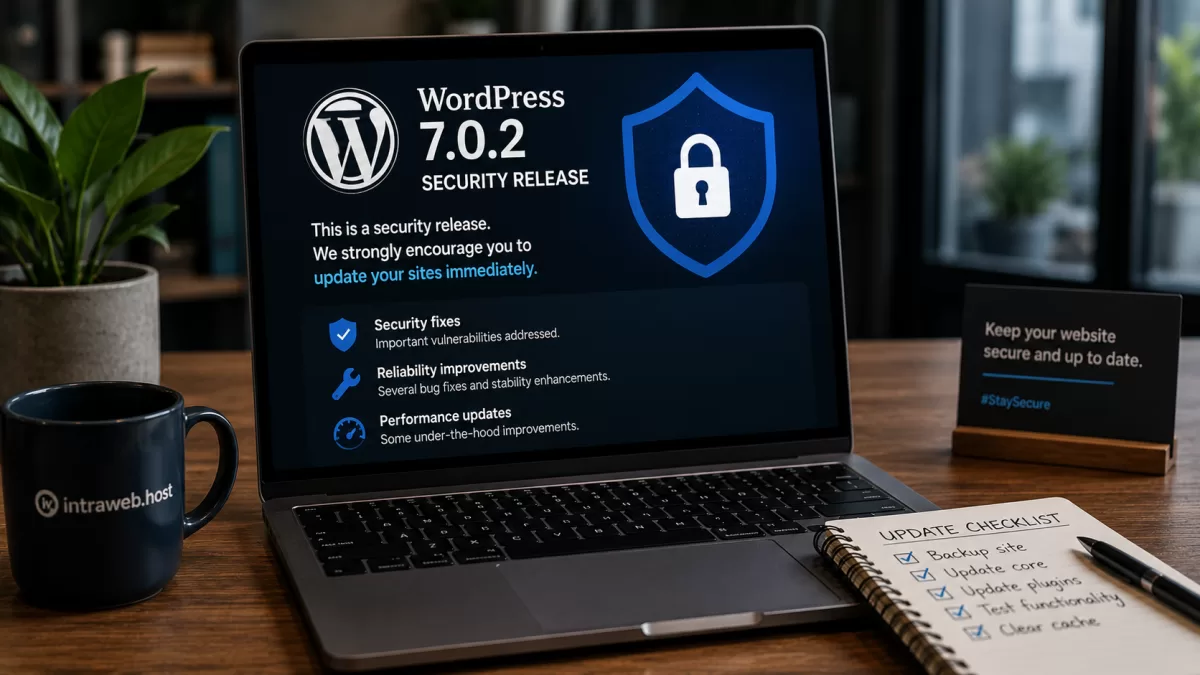
WordPress 7.0.2 addressed serious security issues on July 17, including vulnerabilities affecting database queries and the REST API, making prompt updates especially important.
Caching can make a website dramatically faster, but the word “cache” describes several layers that store different things in different places.
Domain expiry is not just a website problem: it can affect DNS, email, customer trust and the organisation’s ability to recover the name.