Another security release followed quickly
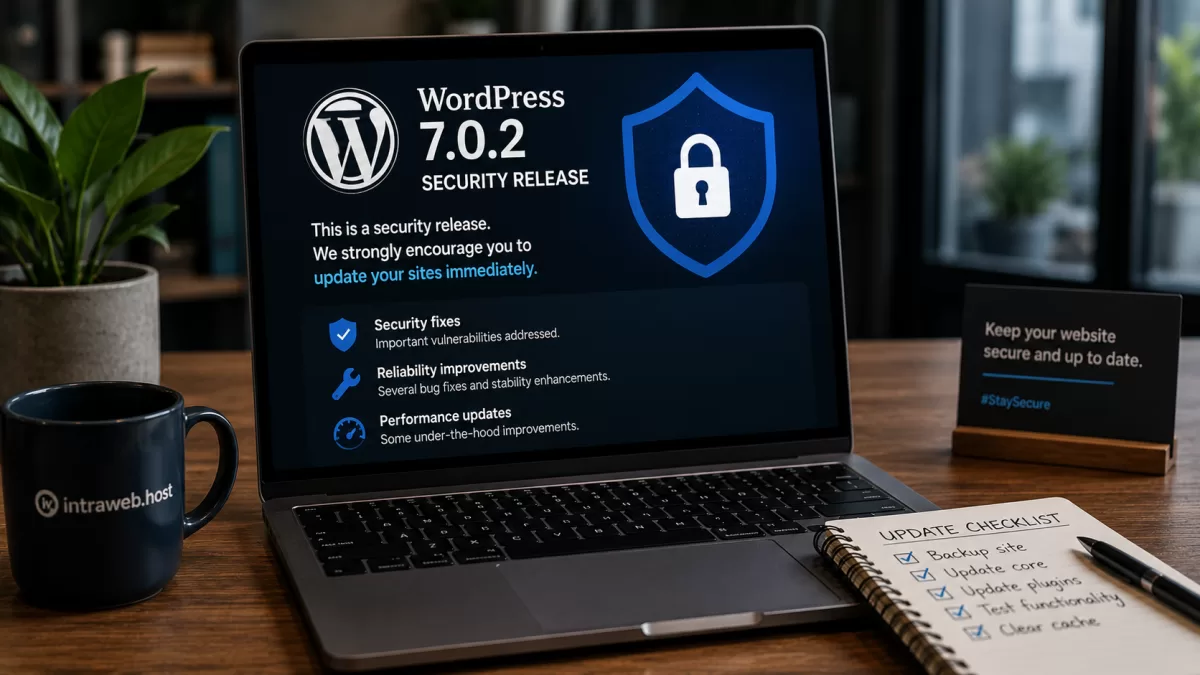
WordPress 7.0.4 was published on August 12, 2026, only days after 7.0.3. The project described 7.0.4 as a security release and recommended immediate updating. A rapid sequence of security releases can be inconvenient, but it also shows why version checks should be routine rather than something performed only during planned redesigns.
The issue depended on permissions and server components
The fixed vulnerability involved authenticated users with Author-level or greater privileges uploading a malicious file on sites using Imagick and Ghostscript, with the possibility of remote code execution. Not every WordPress installation has the same users, permissions or image-processing stack, but administrators should not use uncertainty about exposure as a reason to postpone the vendor-provided fix.
Least privilege remains valuable after patching
Updates close known software vulnerabilities, while account design limits what a compromised or malicious account can attempt. Users should have the lowest role required for their work, old accounts should be removed and administrator access should be tightly controlled. This reduces the attack surface independently of any one WordPress release.
Security maintenance is a continuing process
A site that was fully patched last month is not automatically secure today. Core, plugins, themes and server-side components evolve continuously. Reliable maintenance combines prompt updates, backups, monitoring, access control and periodic review of unused software. The objective is not a one-time “secure” state but a process that keeps reducing avoidable exposure.