
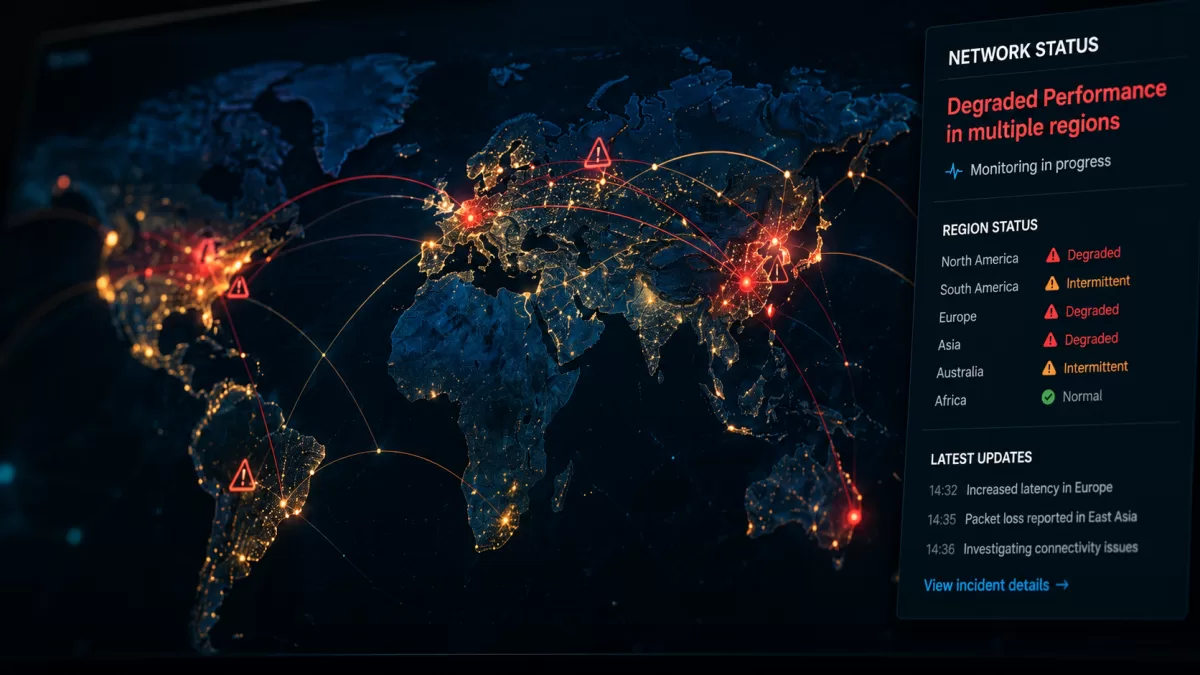
A website is reached through many networks
A visitor does not connect to a server through one universal Internet path. Traffic crosses access providers, transit networks, peering points, DNS infrastructure and sometimes CDN edge locations. A fault in one region or one path can therefore affect a subset of users while monitoring from another country continues to report the site as healthy.
Regional incidents make diagnosis confusing
Cloudflare status reports around the end of July and beginning of August 2026 included network-performance issues affecting locations such as Hamburg. Incidents of this type illustrate why reports can appear contradictory: one user sees errors or high latency while another reaches the same hostname normally. The difference can be geographic, provider-specific or route-specific.
Multiple viewpoints are more useful than one ping
Useful troubleshooting compares DNS answers, traceroutes or connection results from more than one network and region. External monitoring points can show whether the failure is global or localised. Server health still needs checking, but repeatedly restarting a healthy server will not repair a broken route elsewhere on the Internet.
Communication should describe the scope carefully
During a partial incident, saying simply “the website is down” can be misleading. A better description states which users or regions appear affected, which services remain healthy and what is being investigated. This distinction helps technical teams focus on the correct layer and gives customers a more accurate picture of what is happening.