
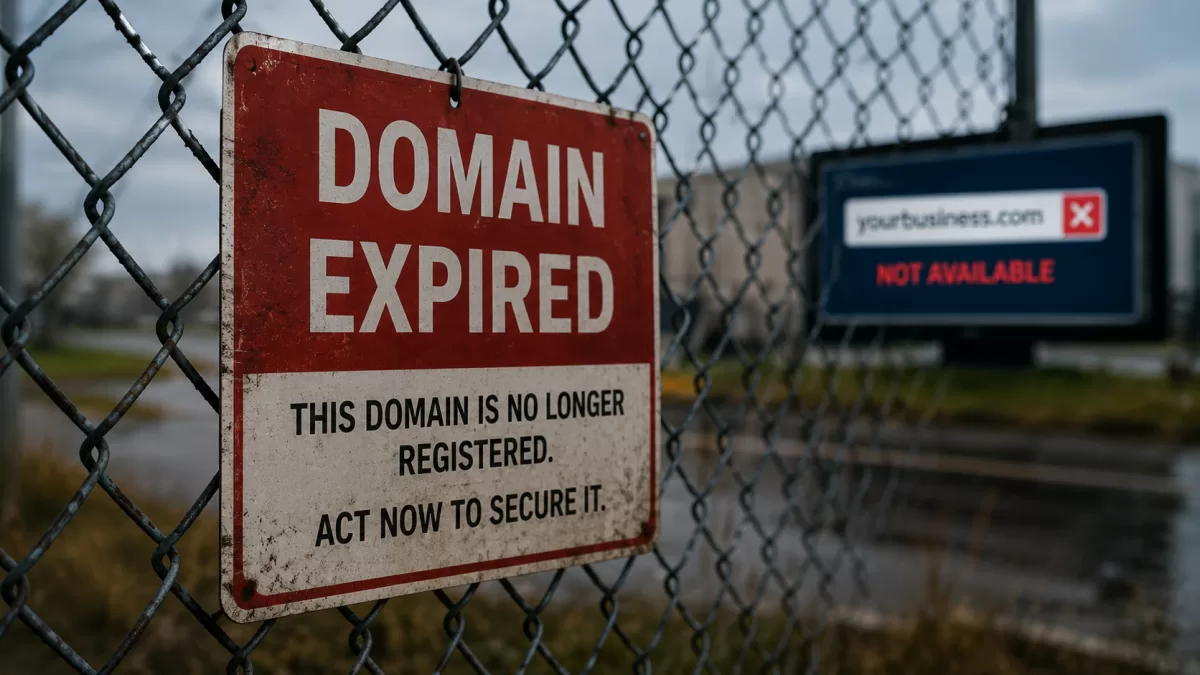
The domain is a dependency for several services
A domain often connects the website, email, subdomains, authentication links and third-party services. When registration is no longer valid, the impact can therefore extend far beyond the homepage. Mail may stop arriving, links in campaigns may fail and users can lose confidence when familiar addresses no longer work.
Expiry does not follow one universal timetable
The exact lifecycle depends on the top-level domain and registrar rules. Some domains have grace or redemption periods; others follow different procedures and fees. That is why relying on a remembered deadline is risky. The authoritative renewal date and the registrar’s rules should be known before the domain approaches expiry.
Recovery can become more difficult and expensive
A recently expired domain may still be recoverable by the existing registrant, but waiting can introduce restoration fees, manual steps or eventually the risk that the name becomes available to somebody else. For a business domain, the cost of losing control can be much larger than the renewal fee because the domain is tied to identity and communications.
Prevention is simple operational hygiene
Use accurate contact details, enable renewal notifications and automatic renewal when appropriate, and make sure the payment method is current. More importantly, the organisation itself should know which registrar holds the domain and who controls the account. Domain ownership should never depend solely on the memory or personal account of one employee, freelancer or former supplier.