
Online does not always mean usable
A basic monitor may request one URL and consider the service healthy when it receives an acceptable HTTP response. That is valuable, but a website can return a page while its database is slow, checkout is failing, DNS is intermittent or an external dependency is timing out. Availability therefore needs context: what was tested, from where, how often and what counted as success.
Response time adds an important signal
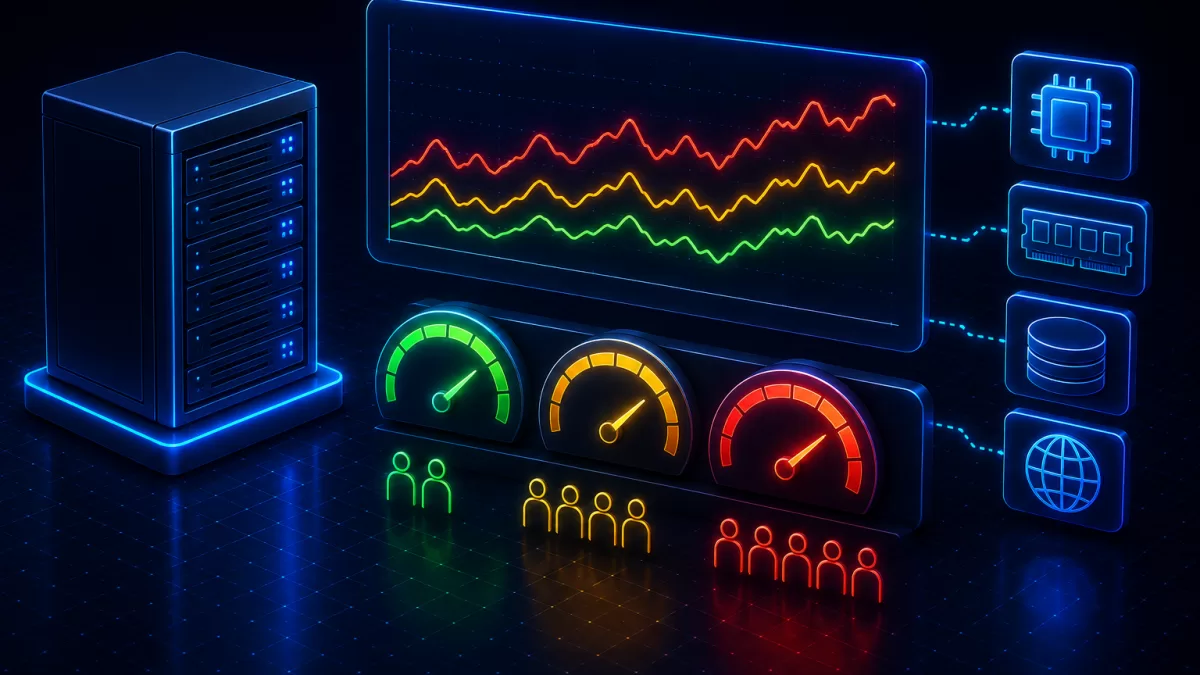
Performance monitoring can reveal degradation before a full outage occurs. A page that normally responds quickly but suddenly takes several seconds may indicate resource pressure, a database problem, an overloaded external API or a network issue. Trends are particularly useful because they show whether the change is temporary or becoming the new normal.
The best checks resemble real use
For an important service, monitoring can go beyond the homepage. DNS resolution, HTTPS validity, a login endpoint, a key application page or a transaction path may deserve separate checks. The goal is not to create hundreds of alarms; it is to select a small number of tests that represent the service customers depend on.
Independent monitoring improves perspective
A check running outside the hosting infrastructure can detect failures that an internal check may miss, especially routing, DNS and public connectivity problems. It also creates an independent timeline for incidents. Monitoring cannot prevent every failure, but it shortens the distance between a problem beginning, being detected and being understood.